
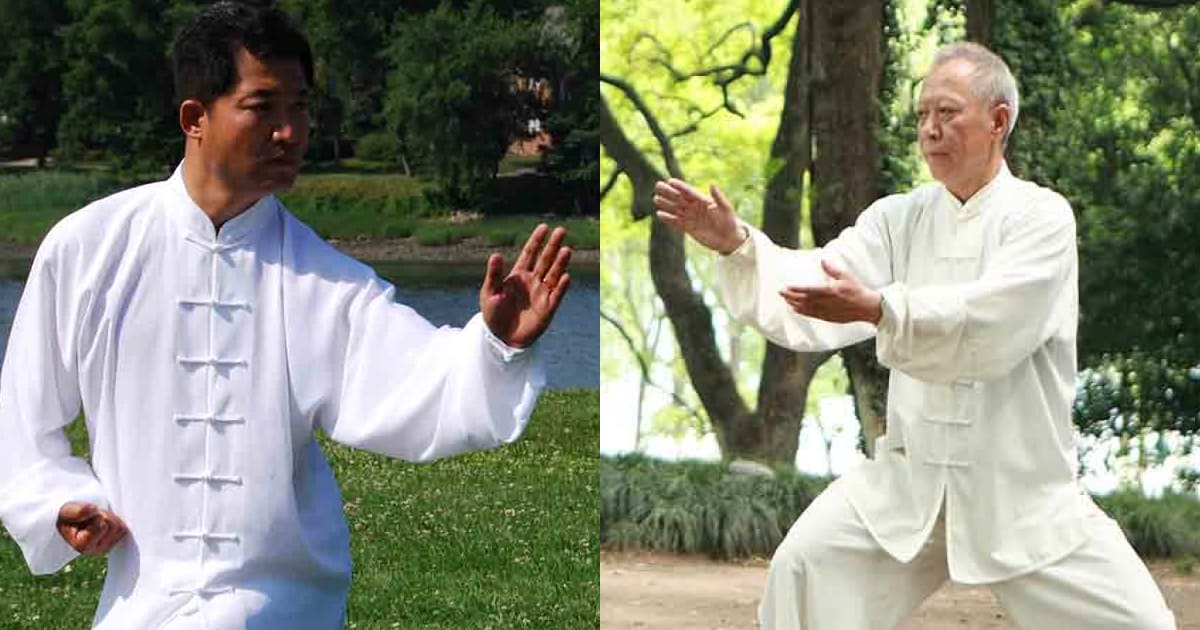
3. MMA vs. Tai Chi
Tai Chi might be a relaxing way to spend a Sunday morning if your THC level is in the right place, but an effective martial art it is not.
Generally when one sees a Tai Chi practitioner they are a much older person who appears to be doing the world’s least demanding set of exercises. To the layperson, it seems as though a Tai Chi master could actually get beaten up by a Yoga instructor.
Tai Chi was originally developed as a martial art however. Like other martial arts, there are rankings and competitions (including “push hands”) and everything.
It seems highly unethical to put a Tai Chi master in a fight with someone trained in MMA however. The video below provides a good example of how Tai Chi measures up as a fighting discipline:
https://www.youtube.com/watch?v=nUOXGQ0MqP0





When it comes to fighting in a one-on-one challenge match situation, MMA is hard to beat. The way MMA fighters tend to synthesize very successful striking arts (boxing, muai Thai) and very successful grappling arts (wrestling, BJJ) prepares them well for both stand up fighting and ground fighting.
It’s arguably the best system for fighting in a ring match, though that’s not the same as being the best martial art. In a fight with weapons, a kenjitsuka, escrima fighter, or HEMA practitioner is likely to beat an MMA fighter. In a self-defense situation, a krav maga fighter is likely to do better against an armed assailant or multiple opponents. For a fight on a pitched rooftop or a balance beam, etc. and a style like shaolin kung fu or ninjitsu that places lots of emphasis on balance will probably do better.
Different martial arts are good for different things and none is best for all situations. If you like sporting matches, as most martial arts students do, MMA is an excellent choice. If you’re from a different style and want to challenge a MMA fighter, don’t try going head-to-head in a ring. Find a kind of match that your style is adapted to and his is not.
Comments are closed.